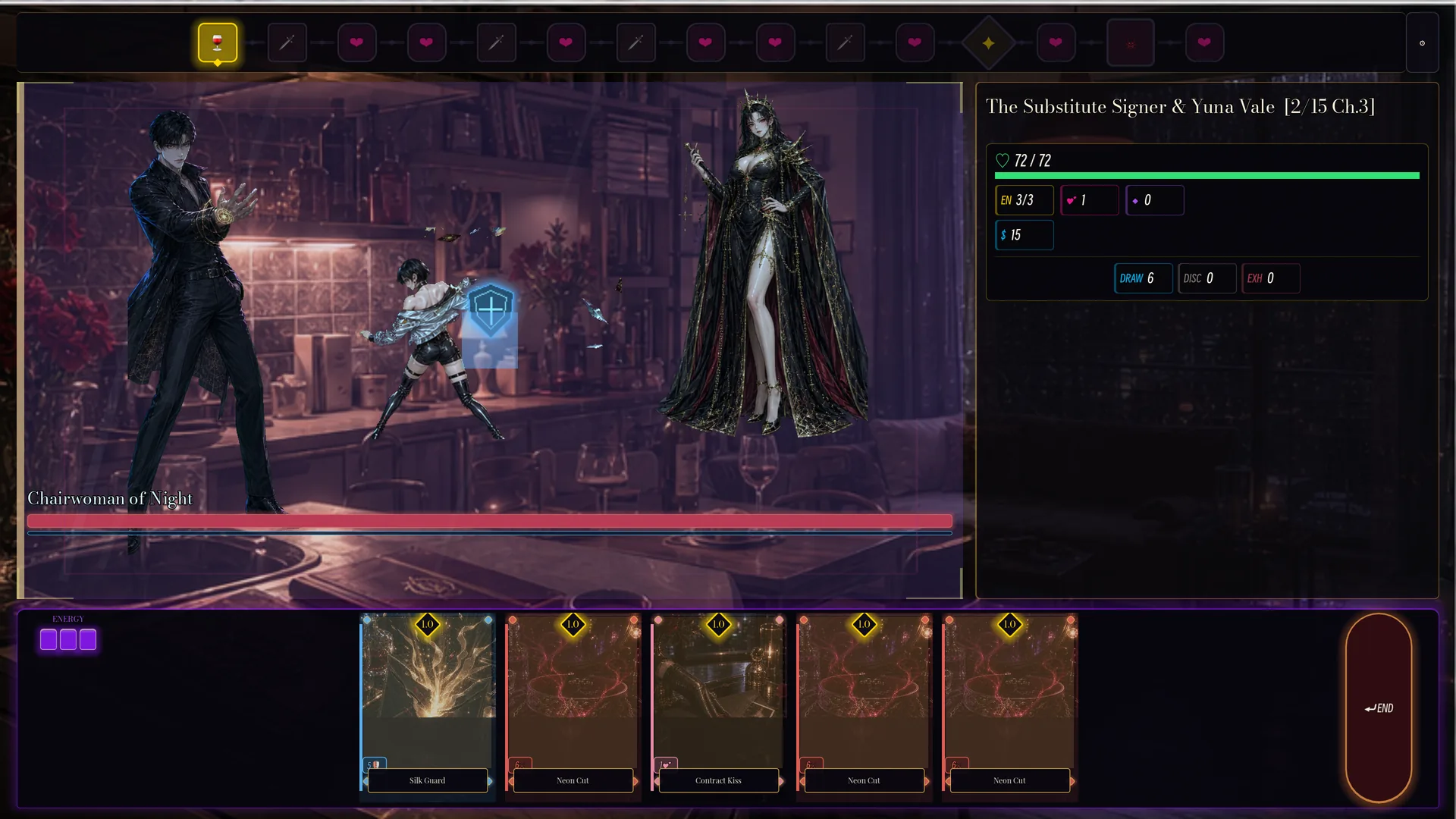
In-game capture · Chapter 3 final boss, the Chairwoman of Night
Narrative Card Roguelike · 2026 · Godot 4
Survive Three Nights
A card roguelike set in midnight Seoul. I designed it alone and built it with a crew of AI agents: three chapters, six characters and eight endings in four weeks.
1 The question I wanted to answer
By 2026, getting AI to write some code was nothing special. I wanted to try something harder. Could one designer, working with AI agents, take a whole game to the point where it plays, gets tested and is ready to hand over? A card roguelike is a strict exam. It is full of rules, numbers and content, and when any of them is wrong, players feel it in the first fight.
The story is set in Seoul after midnight, when a second city appears to people carrying invisible debts. VIP booths turn into altars, corporate contracts bind souls, and idol agency deals trap spirits. You play a young man pulled into one of those debts. Survive three nights, and find out who wrote your name in the Night Board’s ledger.


Key locations · the chaebol penthouse banquet / the moonlit cathedral boardroom


Nightclub ritual room and environment sheet · mirror backstage, rooftop, apartment, cathedral
2 Every card should make you hesitate
Combat follows the Slay the Spire rhythm players already know: draw, spend energy, attack, block, pick a reward. I kept that part familiar on purpose, so all the tension could come from two resources I added. Affection makes your cards hit harder, but every ally you favor makes the others jealous. Contract hands you the strongest cards in the game and drains your health every turn you carry it. Power always arrives with a bill.
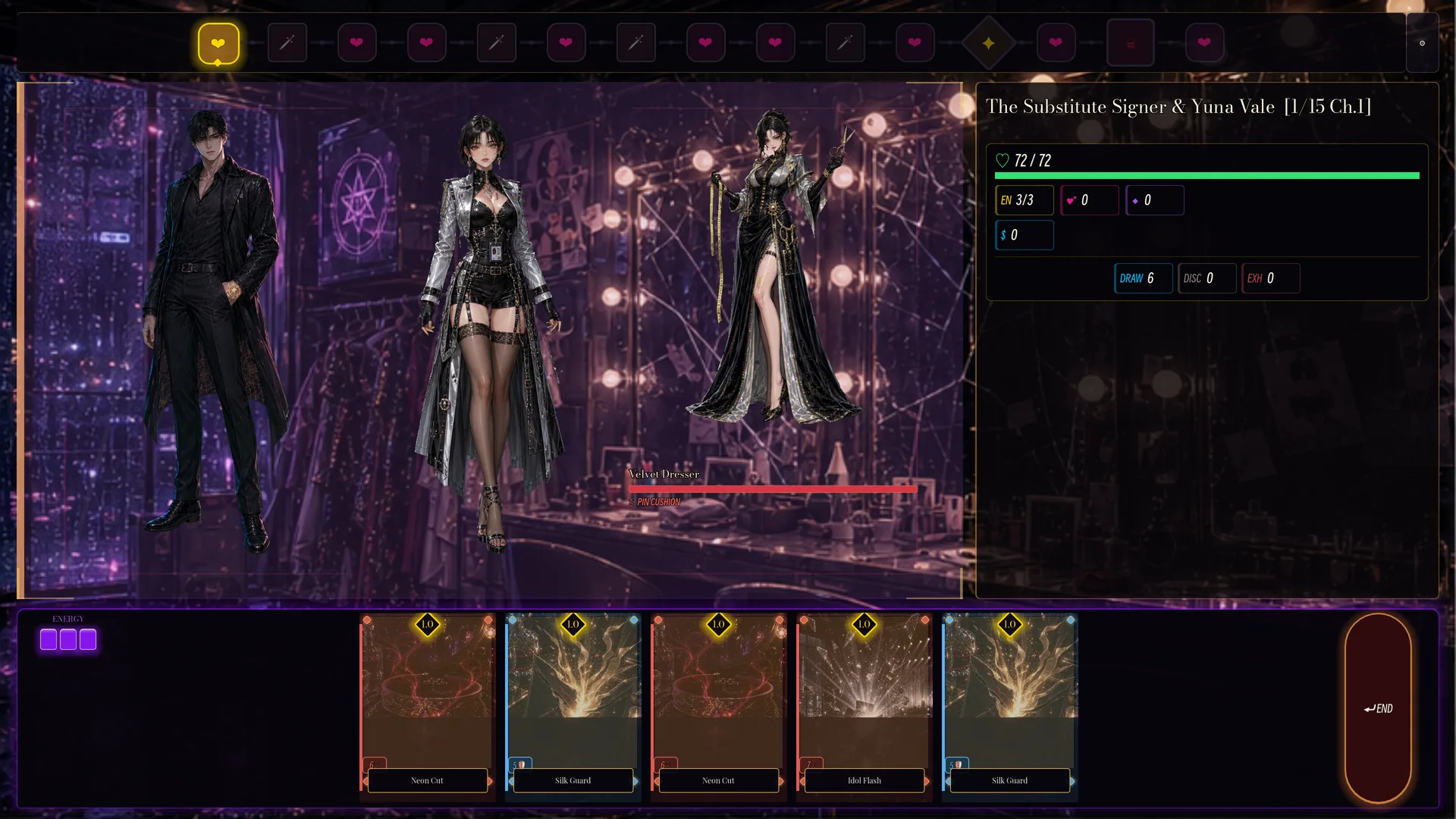
In-game capture · a Chapter 1 fight. Hand, energy, both resources and the whole route sit on one screen.


Card art · Neon Cut (attack), Red Room Feint (evasion), Exorcism Live (purification)
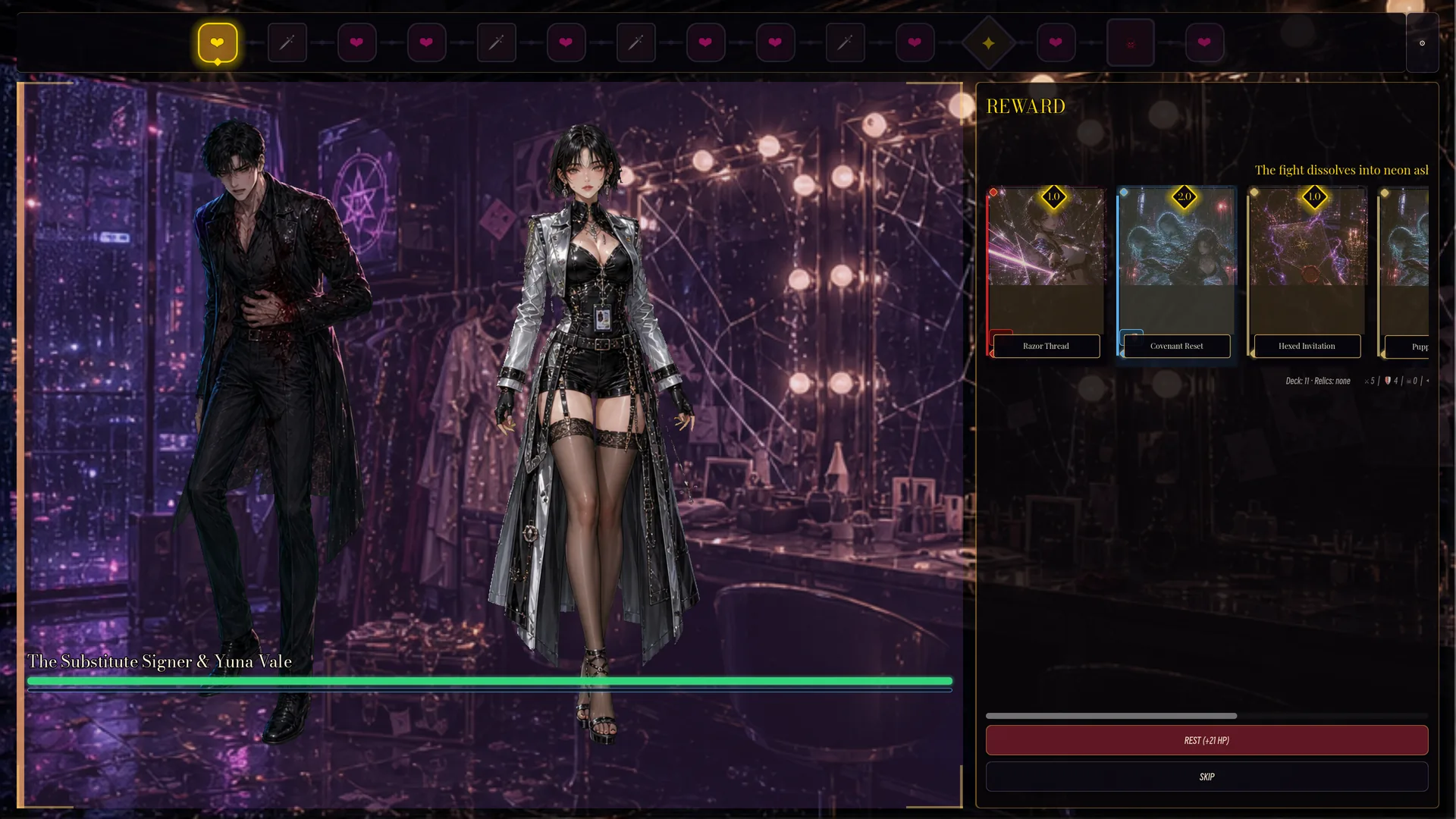
In-game capture · after a win you pick one of several cards, and every pick reshapes the deck


More card art · Paper Talisman, Black Card, Backstage Pass, Oracle Reversal
3 Let the enemies tell the story
Each chapter has its own enemies, elite fights and corruption modifiers that bend the rules. I wanted every boss to tell the story through its mechanics, so players feel the theme in their hands before they read it in dialogue.
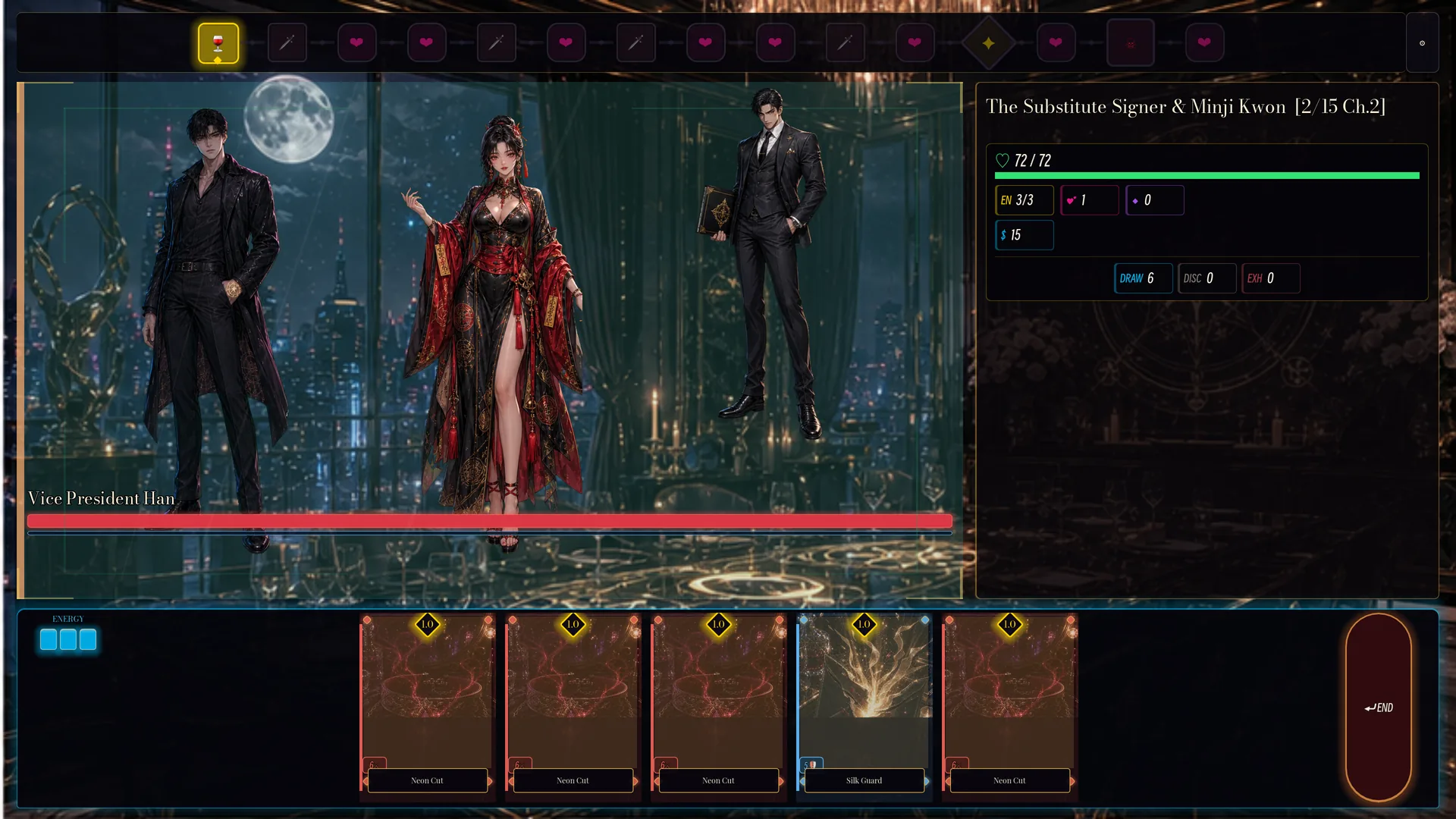
In-game capture · Chapter 2 boss, VP Han, under the moon above Gangnam


Protagonist combat sprite sheet (16 frames) / Neon Wraith, Chapter 1 elite
4 A relationship web that bites back
Six characters, each tracked across seven values: affection, jealousy, trust, secret progress, route stage, betrayal risk and story flags. Lean on one ally for too long and the others notice. Push jealousy past its threshold and they confront you, in combat. Your party has three slots, a main partner, a side partner and support, so every lineup is also a statement about who you trust.
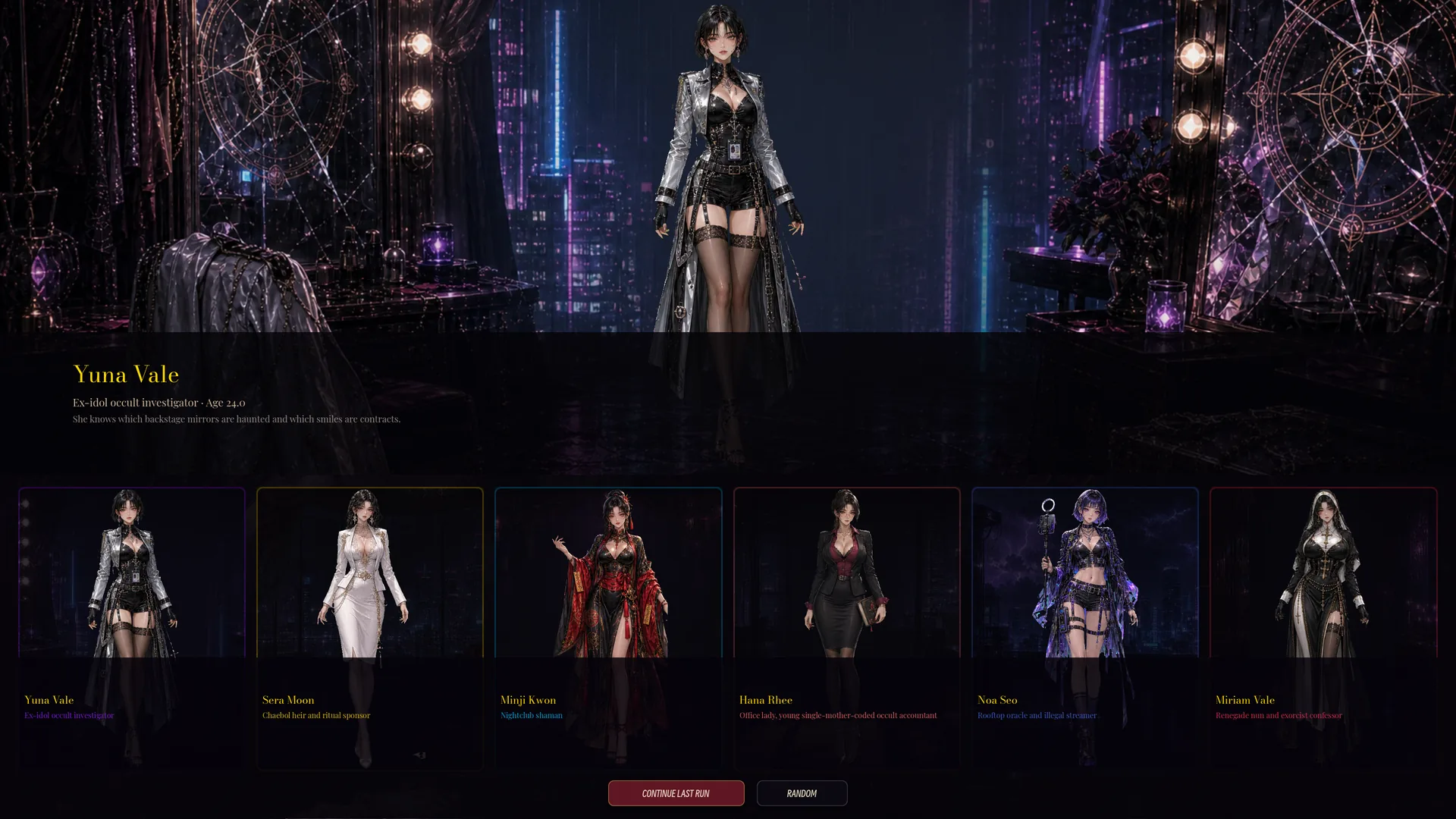
In-game capture · choosing a partner. Each of the six brings her own cards, passive and story route.


Red Thread (binds a relationship) / Neon Rosary (unlocks the hidden character)
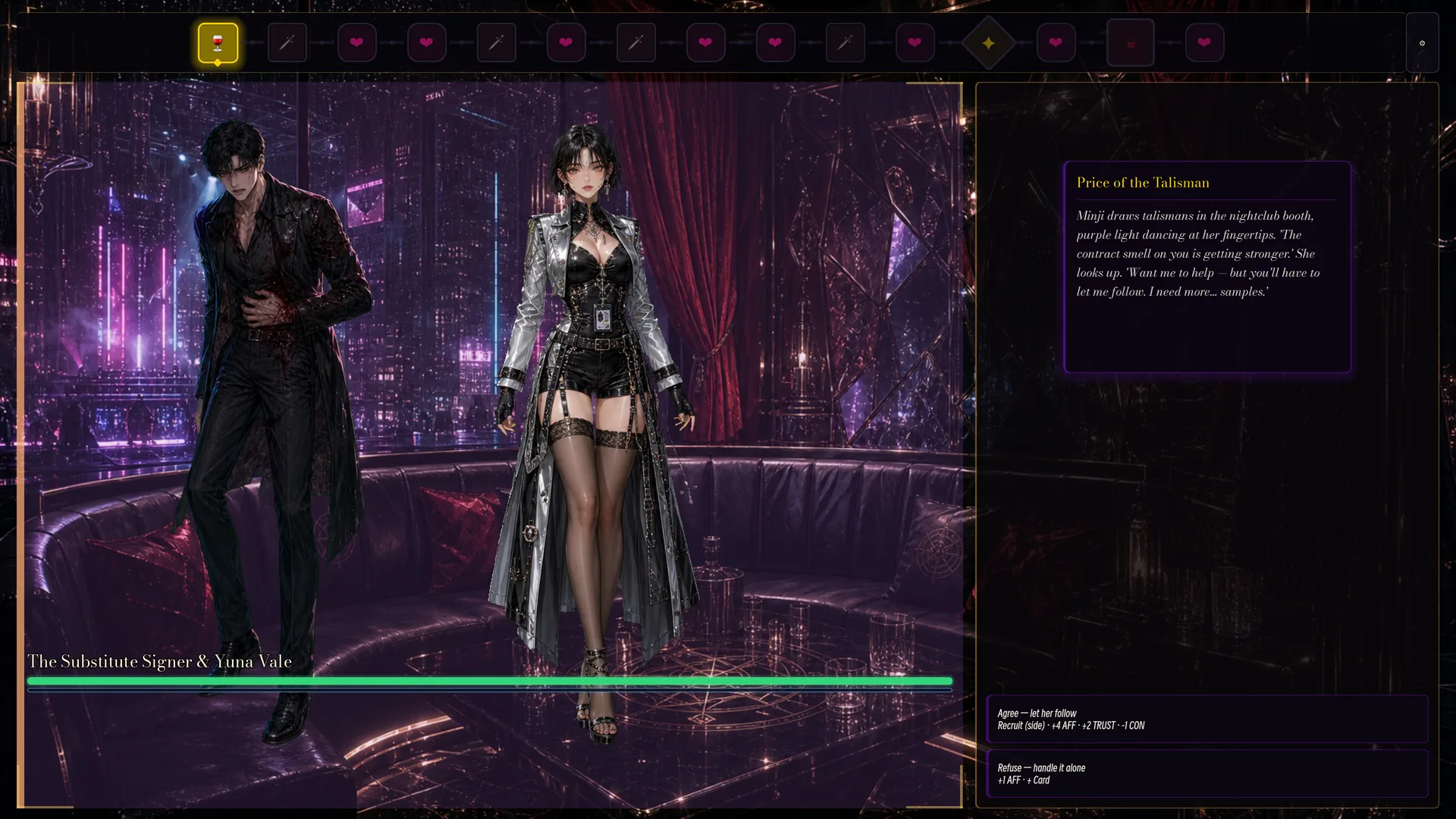
In-game capture · a character event. Each choice spells out what it does to affection, contract and trust.
The ending resolver checks eight endings in a fixed order of priority: Betrayal, Beautiful Collateral, Solo Devotion, Dual Flame, Miriam’s Judgment, A New Board, Debt Cleared and the true ending, Contract’s End. Each one needs its own combination of state, so the ending a player sees is the final tally of how that run was played.


Moon Contract (seals a bond for good) / Covenant Reset (breaks every bond and starts over)
5 Content lives in data
None of the story is hard-coded. Cards, relics, enemies, character events, recruitment scenes and confrontations all live in JSON. I could change a number or rewrite a scene without touching logic, and agents had clear slots to fill when they added content.
- 144 cards, plus 12 synergy cards that trigger when specific pairs of characters fight together
- One map per chapter, with fights, elites, events, confession rooms, shops, contract altars and a boss
- 22 relics, 19 enemies, and branching visual-novel scenes in English and Chinese
- Corruption modifiers change the rules on every run
- Affection buys power and Contract buys risk, so every card pick is a trade
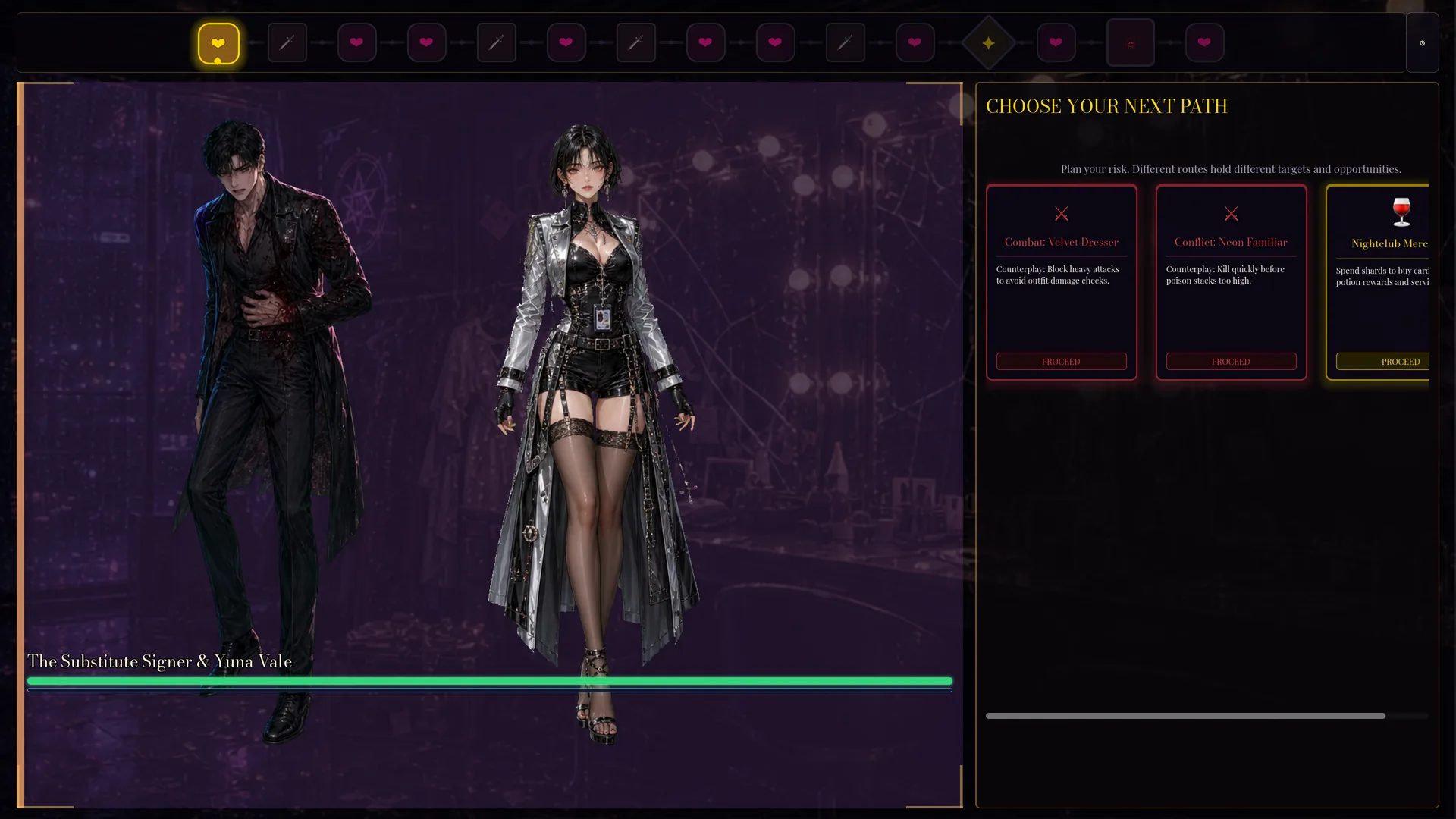
In-game capture · choosing the next path. Each route warns what kind of fight or detour waits ahead.
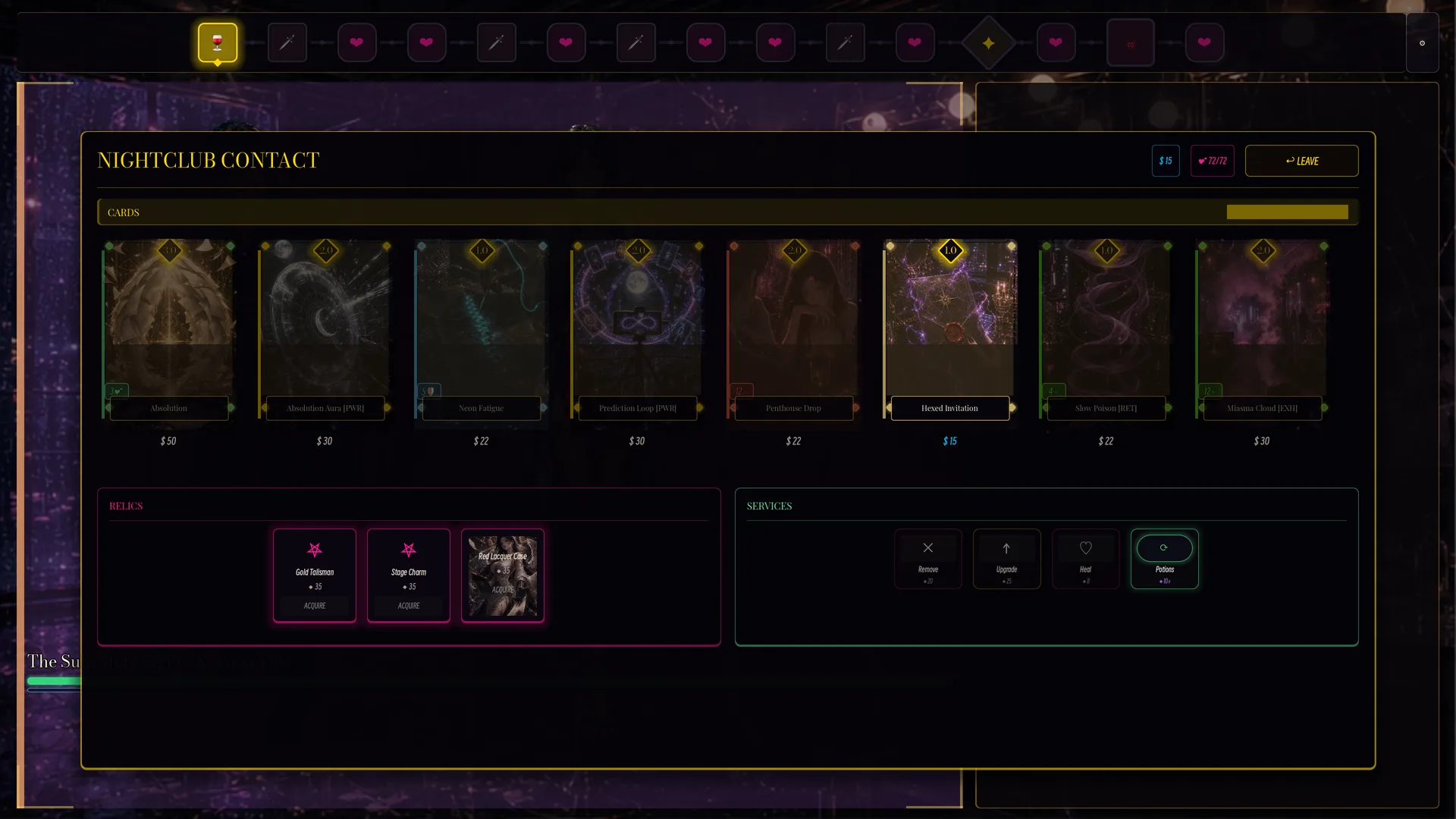
In-game capture · the nightclub shop between fights, with cards, relics and services


Relics and late-game cards · Red Lacquer Case, Velvet Finale, Final Invitation
6 It looked finished
Late in the project the game ran. Cards, enemies and story were all in place, in two languages. Before preparing a Steam release I gave it one full check-up, and found several places where “looks finished” and “is finished” had quietly drifted apart.
19 of 22 relics told Chinese players something different from what the code actually did.
Silver Room Key is a good example. In English and in code, it gives every block card +1 block. The Chinese text promised 2 armor at the start of each turn. Each file looked fine on its own; the error only showed when you put them side by side. Agents had written them in separate passes, and nothing was checking whether they described the same thing.
- The story file was missing its opening brace. Worse, the data loader never complained about broken files. It logged a warning, returned an empty list and let the game boot, so bad data looked like a design bug.
- Some interface text used the Chinese sentence itself as its lookup key. Edit one character of copy and the lookup would silently break.
- The refactor plan said Main.gd would end up under 500 lines. It is still over 12,000. Agents are very good at adding code and almost never take it out on their own.
7 The checks I added
Asking agents to “be more careful” doesn’t scale. So I made mistakes loud instead.
Main.gd is still by far the biggest piece. Cyan marks systems already split out of it, starting with the ones that most needed tests.